


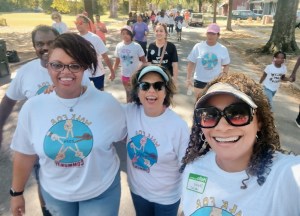









2024 Humanitarian of the Year!

Mission Statement
“We, the members of Second Presbyterian Church, celebrating our rich heritage and the faith we affirm in Jesus Christ as Lord, claim our mission to be a growing and inclusive congregational community where all are committed: to grow in knowledge of the faith, in depth of spirituality, in the quality of our fellowship, and in compassion for all God’s children and creation; to recognize and use effectively the time, talents, and material gifts of all members and of the congregation as a whole; to care actively for the spiritual, physical, and intellectual needs of persons in this congregation, community, and world, and to participate meaningfully in the larger Church.”
Historically trailblazing Second Presbyterian Church is a congregation of the Presbyterian Church (USA) located in Little Rock, Arkansas, seeking to proclaim the gospel of Jesus Christ to all. It is a growing and inclusive congregational community where all are committed to growing in knowledge of the faith, depth of spirituality, quality of fellowship, and compassion for all God’s children and creation.
Taking its place in history, with the leadership of then head pastor, Dr. Boggs, the church was one of the few congregations that spoke out publicly advocating for the desegregation of public schools. In addition, despite bomb threats and other vulgar harassment, Second Presbyterian continued to hold integrated church services and fellowship meals with Allison Memorial Presbyterian Church, a historically black congregation in Little Rock.
Throughout the years, Second Presbyterian has been known for its progressive positions in theology, church policy, and social action. During the war in Vietnam, the head pastor of the congregation led a group of other Presbyterian pastors in paying for and displaying a billboard on Cantrell Road with anti-war sentiments. The same pastor also led a Service of Prayer and Repentance in opposition to the war.
Second Presbyterian is the largest Presbyterian church in Arkansas, and it has joined with other Presbyterian churches and faith communities in offering a progressive theological voice for the state and region. The church offers ministries and support to individuals and families of all ages and stages, and its campus also serves as the home of the Second Presbyterian Church Preschool, LifeQuest of Arkansas, and numerous 12-step groups.
Through its outreach budget, Second Pres annually supports over forty local, state, and national organizations, and it participates in numerous civic initiatives, including interfaith partnerships and advocacy for the LGBTQ community.
Currently, the church continues to set itself apart by educating the community. On any given evening, one might walk into the church and find a class on topics such as race, the death penalty, gay marriage, how to be an LBGTQIA+ ally training, and even a class taught to help with understanding the current war between Israel and Palestine.
Recently the church adopted a new vision statement:
“Whoever and Wherever You Are, We Welcome You into a Life with Christ at Second Presbyterian.”In 1990, it was noted that the church took the AIDS pandemic head on, during a funeral. The Reverend Allen J. Smith drew parallels from AIDS to leprosy and during his sermon, preached that Christians should begin to embrace AIDS patients the way Jesus embraced the lepers in the Bible.
The church has also been a leader in providing gender diversity in Little Rock’s religious landscape for many years. In 1992, Associate Pastor Karen Akin was one of the first female pastors in the city and faithfully served the congregation for 25 years.
Second Presbyterian has also been a trailblazer in LGBTQIA+ inclusivity. In 2009, the congregation elected its first out LGBTQIA+ Deacon, two years before the Presbyterian Church (USA) denomination proclaimed that LGBTQIA+ members were eligible for leadership roles in the church.
And if that wasn’t enough, the church has been a leader in racial justice and equity in the community. In 2021, the church established its Racial Justice Task Force made up of its congregation members who are tasked with making recommendations to the church’s leadership on how to be more inclusive and deliberately work toward racial justice in the community at large.

